Georgia (the country, not the US state) has quietly become one of the best banking jurisdictions in the world for international founders. Non-residents can open accounts in a day, often without a residency permit. Multi-currency accounts in USD, EUR, GBP, and GEL are standard. SWIFT transfers are free or near-free. And the regulatory environment is friendly to crypto, high-risk industries, and international clients that EU banks have been aggressively de-risking.
If your US LLC or European structure is struggling with banking, Georgia is worth serious consideration.
Why Georgia?
Georgia's banking sector is unusual for Europe. The two largest banks (TBC and Bank of Georgia) are publicly traded on the London Stock Exchange, follow modern KYC/AML standards, and compete actively for international clients.
Key advantages for international founders:
- Remote or same-day account opening for non-residents (often with just a passport)
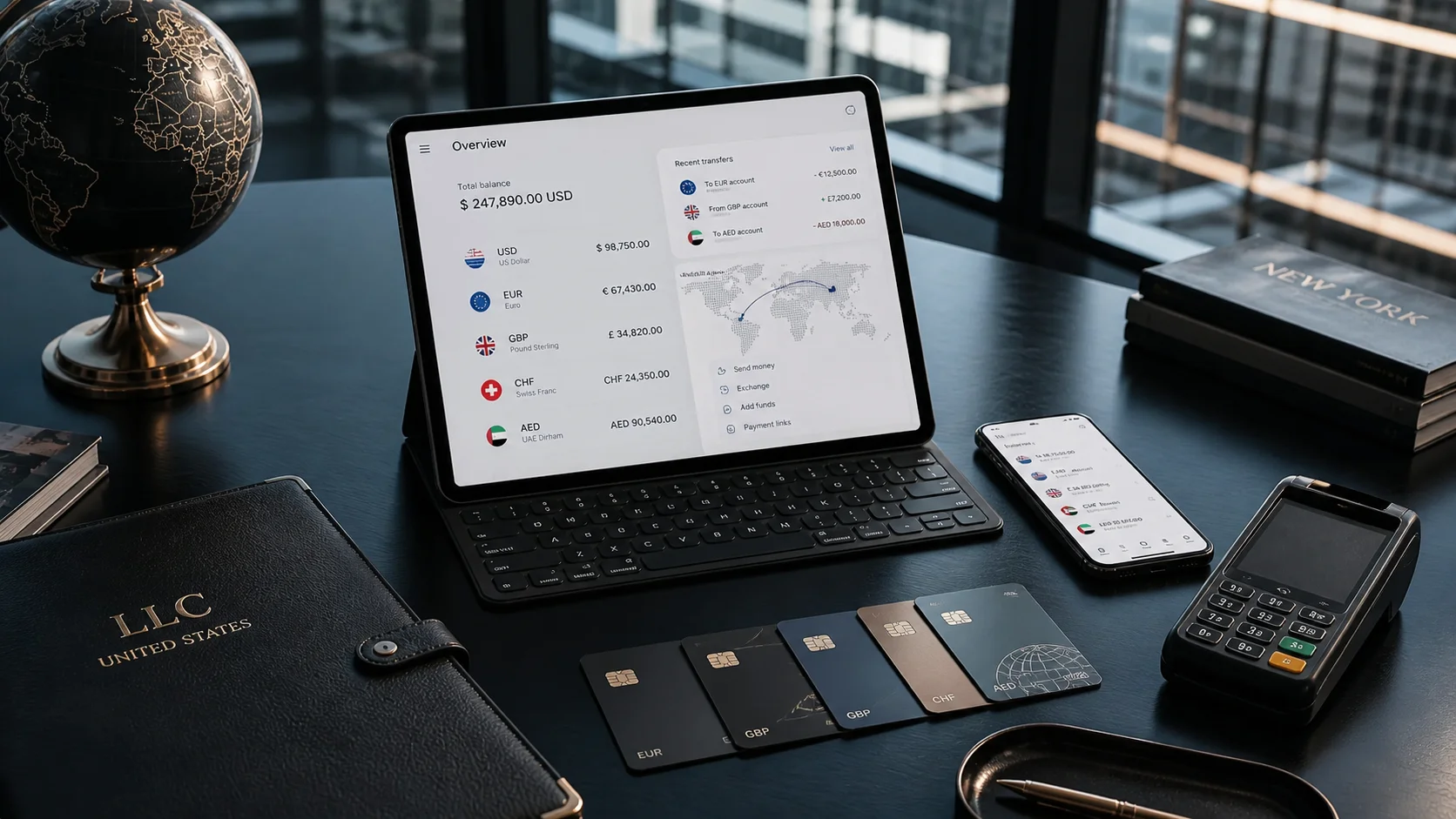
- Multi-currency accounts as standard — USD, EUR, GBP, CHF, GEL
- Free or cheap SWIFT transfers (TBC: $25 flat; BoG: similar)
- No minimum balance at most banks (or very low, like $100)
- Modern mobile apps with international-grade UX
- English-speaking staff at main branches
- Crypto-tolerant — doesn't automatically close your account if you receive crypto exchanges
- No CFC reporting to EU countries (Georgia is not in the OECD's automatic exchange of information for most EU states... though it is joining)
Combined, these make Georgian banks a realistic backup (or primary) banking relationship for European founders whose local banks are becoming unreliable.
The Main Banks
TBC Bank
The largest bank in Georgia, publicly traded on LSE (TBCG).
- Non-resident account opening: yes, typically same day in Tbilisi branch
- Documents needed: passport, proof of address (recent utility bill), sometimes proof of income
- Minimum deposit: ~$100-500 depending on account tier
- Currencies: USD, EUR, GBP, GEL, CHF
- SWIFT transfers: ~$25 flat (incoming: free-$10)
- Mobile app: excellent
- International cards: Visa and Mastercard, including black/premium tiers
- Fees: ~$3-5/month for premium accounts
TBC is the default recommendation for most non-residents. Fast, reliable, modern.
Bank of Georgia (BoG)
The second-largest bank, also LSE-listed (BGEO).
- Non-resident opening: yes, similar process
- Documents needed: passport, proof of address
- Minimum deposit: ~$100
- Currencies: USD, EUR, GBP, GEL
- SWIFT transfers: similar pricing to TBC
- Mobile app: good
- International cards: Visa, Mastercard, including MasterCard World and Platinum
BoG has slightly better branch network outside Tbilisi. Functionally equivalent to TBC for most use cases.
Credo Bank
Smaller, more retail-focused, but increasingly welcoming to international clients.
- Non-resident opening: possible, more paperwork
- Better for smaller deposits
- Less premium product range
Good secondary option.
Terabank
Compact, digital-forward.
- Strong digital onboarding (has done remote onboarding in some cases)
- Smaller branch network
- Good for clients who prefer fully digital experience
Liberty Bank, BasisBank, PashaBank, others
Smaller banks — less friendly to non-residents, mostly serve local market. Not typically recommended unless you already have a Georgian tax ID.
Comparison Table
| Bank | Non-res opening | Min deposit | SWIFT cost | Multi-currency | Crypto-friendly |
|---|---|---|---|---|---|
| TBC Bank | Same-day | ~$100 | $25 | Yes (5+) | Tolerant |
| Bank of Georgia | Same-day | ~$100 | $25 | Yes (4+) | Tolerant |
| Credo Bank | 1-3 days | ~$100 | $20-30 | Yes (3+) | Mixed |
| Terabank | Remote possible | ~$100 | $25 | Yes (3+) | Tolerant |
| Liberty, BasisBank | Difficult | — | — | Limited | No |
How to Open an Account
The Standard Path (TBC / BoG)
- Book a flight to Tbilisi — no need for special visa; EU/US/most passports get visa-free entry
- Prepare documents — passport, proof of address (recent bank statement or utility bill from your home country), sometimes CV or business description
- Walk into a branch — Tbilisi has dozens; the main branches on Rustaveli Avenue handle non-residents well
- Open the account — process typically takes 1-3 hours, you leave with cards and activated online banking
- Deposit the minimum — wire from another account or deposit cash
Total time: 1 business day, often a few hours.
Remote Opening
Some Georgian banks will accept remote onboarding via a local representative or notarized documents. Terabank and some TBC branches have done this for clients with proven business need. It's slower (1-2 weeks) and adds paperwork.
Most founders just fly in. Tbilisi to London is 4-5 hours direct; Paris 5 hours; Frankfurt 4 hours. Worth the trip.
What You Can Do With a Georgian Bank Account
- Receive USD/EUR/GBP wires from clients worldwide (including Stripe, PayPal, Wise)
- Send SWIFT payments to suppliers globally (cheap)
- Hold multi-currency balances without conversion
- Get a functional debit card (Visa or Mastercard) accepted worldwide
- Integrate with Wise, Revolut, Payoneer as a backup destination
- Park emergency savings outside EU jurisdiction
Common use cases for international founders:
- Primary backup: second operational account in case your primary bank freezes funds
- Currency play: hold USD/GEL mix to benefit from Georgia's stable-ish currency
- Diversification: remove concentration risk from a single bank/jurisdiction
- Business continuity: particularly important for crypto, adult industry, gambling, or other "high-risk" industries hit hard by European de-banking
Caveats and Limits
1. CRS Reporting (Starting to Apply)
Georgia signed the CRS Multilateral Competent Authority Agreement and is gradually implementing automatic exchange of information. Accounts are increasingly reported to your home country's tax authority. Don't use Georgian banks to hide income.
2. Not a Tax Haven
You still owe tax wherever you're resident. A Georgian account doesn't change your tax residency. Income earned abroad and held in Georgia is still reported to your home country (if CRS applies to your nationality).
3. Currency Risk (GEL)
Georgian Lari (GEL) can be volatile. Keep operational funds in USD or EUR; use GEL only for local expenses if you're living there.
4. Compliance Scrutiny for Very Large Transactions
Above ~$100k-500k wires, banks will ask questions. Have source-of-funds documentation ready.
5. Political / Geopolitical Exposure
Georgia borders Russia. Tensions in 2022-2024 created banking uncertainty but banks have continued functioning normally. Keep operational balances modest if this concerns you.
Best Setup for a European Founder
For a typical European founder with a US LLC:
- Primary operational account: US LLC → Mercury, Relay, or Wise Business (for USD received from clients)
- Backup / emergency: Georgian TBC Bank account in USD and EUR
- Personal savings: diversified across Georgian bank + home country + crypto
This gives you three independent banking rails: US, Europe, and Georgia. If any one freezes you, you have continuity.
Next Steps
Opening a Georgian bank account takes one trip to Tbilisi and a morning's work. The benefit — a robust secondary banking relationship outside the EU — is disproportionate to the effort.
At Leasum, we help clients set up their international banking stack, including Georgian accounts as part of a broader multi-jurisdiction banking strategy. If you're running a US LLC or Paraguayan residency setup, adding Georgia to your banking layer is one of the highest-value moves you can make.